


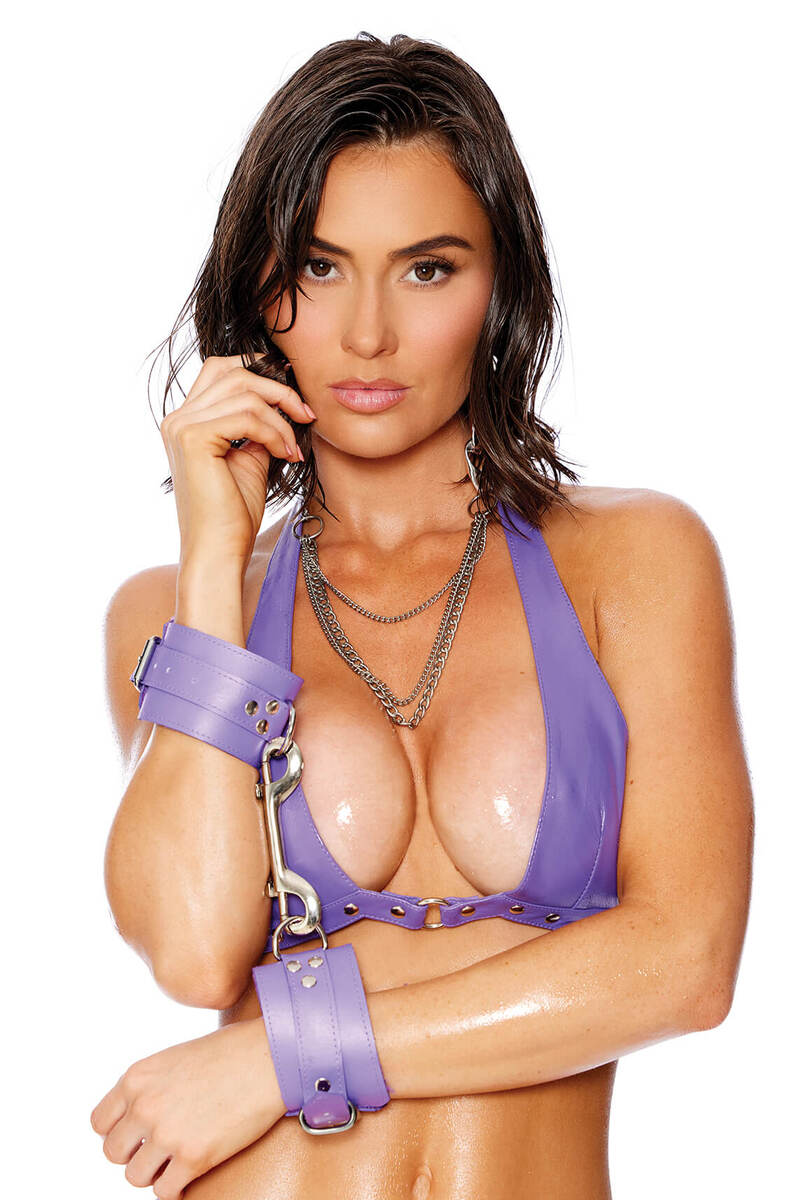


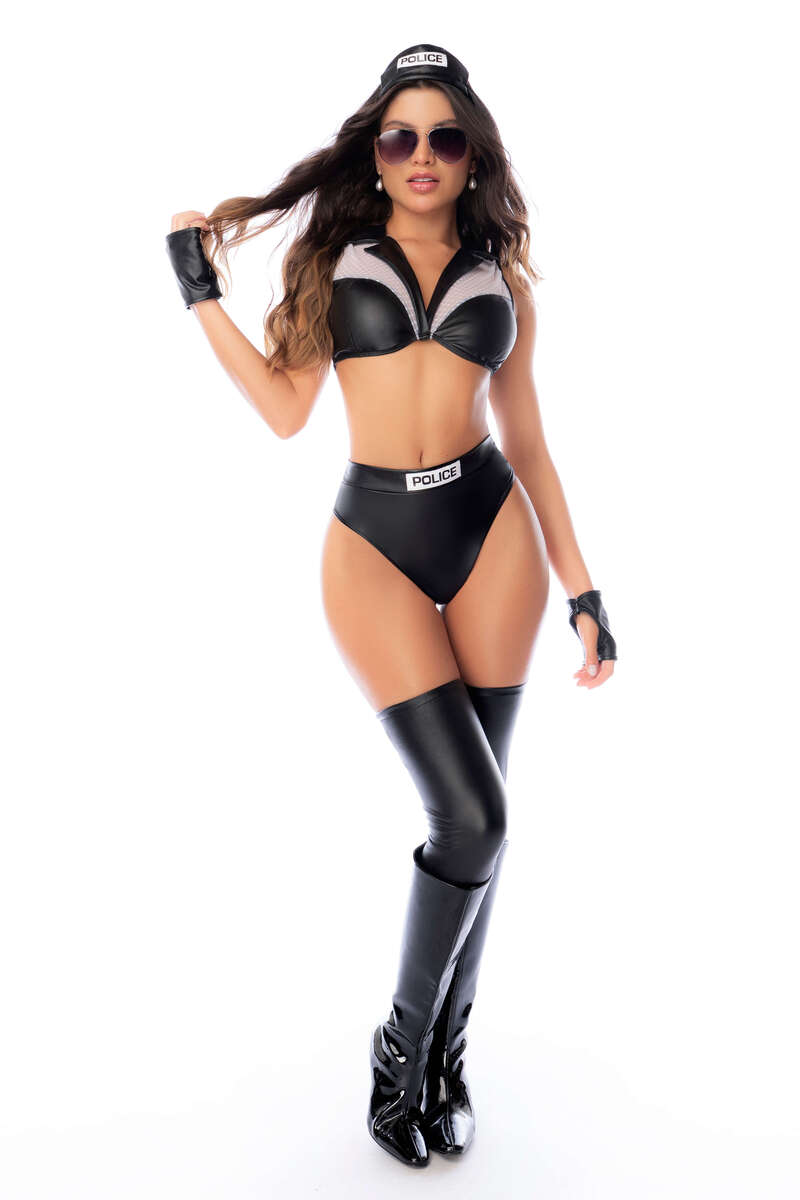


How Wet Look Fabric Actually Behaves
Most wet look pieces are made from stretch PU or vinyl-coated fabric blended with spandex, which gives the material both its reflective surface and its shape recovery. Because the fabric is structured rather than soft, it creates body-hugging lines without underwire or boning, making it distinct from lace, satin, or mesh lingerie that relies on softer construction. It photographs sharply and holds its shape throughout wear in a way softer fabrics often don't.
Where Wet Look Works Best
Bodysuits and teddies are the most common wet look lingerie silhouettes, and both work well because the fabric's unbroken, form-fitting surface benefits from a clean line from shoulder to hem. Two-piece sets with a bra-style top and matching skirt, shorts, or thong are also widely available. Strappy cutout details and metal ring hardware appear consistently across styles and pair naturally with the sleek material. Crotchless designs are a consistent presence in wet look lingerie as well. For crotchless lingerie beyond wet look fabrics, there's a dedicated collection covering far more materials and silhouettes.
Getting the Fit Right in Stretch PU
Wet look fabric has stretch but doesn't give the way cotton or mesh does, so it's less forgiving than it might appear. Pieces that sit close to the torso show every detail of the fit, which means sizing accurately matters more here than it would for a loose babydoll or chemise. For plus size wet look lingerie, styles with a wider stretch range or additional panels tend to keep the finish smooth and even. Size charts are on each product page and worth checking, since sizing varies by brand. Coquette's Darque Collection makes some of the most carefully constructed wet look lingerie available, for shoppers who want more architectural detail in the finish.