



Two Legs, No Band
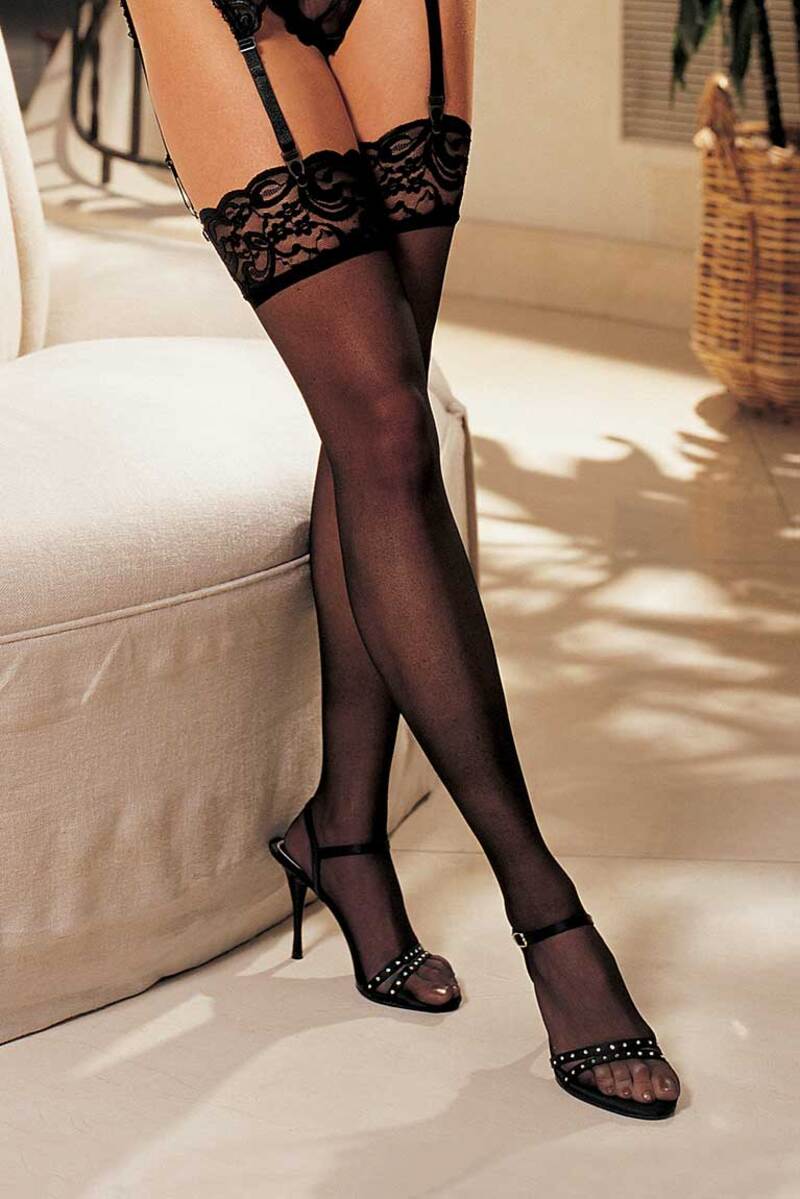
Nylon stockings cover each leg separately rather than joining into the single sheath you get with pantyhose, and they carry no built-in elastic or silicone band the way thigh-highs do. A garter belt does that job instead, clipping at four or six points along the top of each leg rather than holding on through grip alone. Most garter belts use adjustable straps with metal or plastic clips, so length usually isn't the problem, but the stocking's welt, the reinforced band at the very top, needs to sit right where the clip attaches or the leg sags no matter how tight the strap is. Within the hosiery collection, stockings are the one style built specifically around that garter attachment, separate from the self-supporting band on thigh-highs or the single sheath of pantyhose. The garter belt itself is a separate lingerie accessory you'll need before wearing stockings for the first time, since it isn't included with the stockings.
Sheer Isn't Free
Denier measures thread thickness, and it's the number that actually predicts how a pair of nylon stockings behaves, not the color or the pattern. Sheer stockings sit around 10 to 15 denier, thin enough to look like bare skin with a slight sheen, and they run the moment a snag catches because there's so little nylon there to resist it. Anything from 20 to 30 denier reads semi-opaque and holds up to more handling before a run starts, while 40 denier and up looks fully opaque and is the most forgiving of the group. Pure nylon has almost no stretch recovery, so a snag spreads fast once it starts. Nylon blended with a small percentage of spandex resists that spread, since the fiber has some give instead of just breaking under tension. A reinforced toe won't stop a run from starting elsewhere, but it does remove the single most common failure point, since that's where a shoe or a nail catches first when stockings go on. Because sheer, low-denier styles are the ones most likely to run on first wear, they tend to work best as an occasion piece in a lingerie collection rather than something reached for daily.
A Straight Seam Isn't Automatic
Back-seam stockings run a visible line up the center back of each leg, a detail left over from the shaped construction of pre-1960s hosiery and now added deliberately for the vintage look rather than out of structural necessity. That seam drifts a few degrees off-center over the course of wearing them, since the leg moves and the nylon shifts with it, so it needs the occasional check and straighten, usually easiest done at the back of the knee where the twist shows first. Seamless stockings, knit in the round with no back seam at all, skip that maintenance entirely and are the better pick if you'd rather not think about it once they're on. Sizing works differently here than it does with pantyhose, too: because a stocking's welt only has to hold at the thigh rather than stretch across the hips and waist the way a pantyhose panel does, the size range tends to run more forgiving, with more room between sizes before fit becomes an issue. If a single-piece, waist-to-toe style is what you're actually after instead, the pantyhose collection covers that fit range in more depth.